
 Business License
How to Buy an Industrial Grinding Mill: A Step-by-Step Procurement Guide
In 2021, a mineral processing company in East Africa ordered a grinding mill from a supplier they had found through an online trade platform. The price was attractive — roughly 22 percent below the next quotation — and the sales representative was responsive and professional. The mill arrived on site eight months later. During commissioning, the team discovered that the feed system was undersized for their material, the classifier motor was rated for 50 Hz while their local power supply was 60 Hz, and the wear parts were made from a base-grade alloy that lasted barely 3,000 hours in their abrasive dolomite feedstock.
The total cost of retrofitting, replacing, and reconfiguring the installation exceeded the original equipment purchase price. The root cause was not a dishonest supplier — it was a procurement process that focused exclusively on ex-works price and ignored every other dimension of technical and commercial fit.
Buying an industrial grinding mill is fundamentally different from buying a standardized piece of equipment like an electric motor or a conveyor belt. A grinding mill is a custom-configured capital asset with a service life measured in decades, and the procurement process needs to reflect that reality. This guide walks through the entire buying cycle — from defining requirements to commissioning — with a focus on the decisions that separate successful installations from expensive regrets.
1. Start with the Material, Not the Machine
The most common procurement mistake is starting with the mill specification rather than the material it will process. Every grinding mill is sized and configured around the feedstock characteristics, and getting those characteristics wrong at the specification stage cascades into every downstream decision.
Before engaging any grinding mill manufacturer, you should have laboratory data on at least four material properties. First, the Bond Work Index — a measure of grindability expressed in kilowatt-hours per ton — determines the power requirement for achieving a given size reduction. Limestone typically shows a Bond Work Index between roughly 8 and 12 kWh/t, while harder materials like quartzite or certain ores can reach 15 to 22 kWh/t. A mill sized for limestone will be substantially undersized for quartzite at the same throughput target.
Second, the material's abrasiveness — typically measured by the ASTM G65 or similar abrasion test — determines wear part material selection and replacement intervals. Third, the feed moisture content dictates whether a hot gas drying system is needed and at what capacity. Fourth, the feed particle size distribution determines whether pre-crushing is required and at what reduction ratio.
If you do not have laboratory data on these properties, most manufacturers can perform the tests on a representative sample — typically 20 to 50 kilograms of material — and include the results in their technical proposal. Guilin Hongcheng Mining Equipment Manufacturing Co., Ltd. offers this test grinding service at no charge for serious procurement inquiries, and the resulting grindability report forms the basis for the equipment sizing and performance guarantee.
2. Define Your Performance Requirements Precisely
Once the material properties are established, the next step is translating commercial requirements into technical specifications that a manufacturer can design against. This requires specificity — "we need to grind limestone" is not a specification; "we need to produce limestone powder at 325 mesh D97, at a rate of 15 tons per hour, from feed material with a top size of 40 millimeters and moisture content of up to 8 percent" is.
The performance specification should cover at least six parameters: target throughput in tons per hour at a defined fineness, acceptable product fineness range (including both D97 and the allowable percentage above or below target), feed material specifications (top size, moisture range, any contaminants), product quality requirements beyond particle size (whiteness, purity, iron contamination limits), ambient conditions at the installation site (altitude, temperature range, humidity), and utility specifications (available voltage, frequency, water supply).
A well-defined performance specification does two things. It enables manufacturers to provide comparable quotations — if each supplier sizes their equipment to a different implied throughput or fineness, the prices are not meaningfully comparable. And it forms the basis for the performance guarantee or acceptance criteria — the objective standards against which the installed mill will be judged during commissioning.
3. Evaluate Manufacturers Beyond the Price Quote
Comparing grinding mill manufacturers solely on equipment price is like comparing cars based on the purchase price while ignoring fuel consumption, maintenance costs, and resale value. The ex-works price of the mill itself typically represents only 50 to 65 percent of the total cost of ownership over a 10-year life — the rest is energy, wear parts, maintenance labor, and downtime.
When evaluating manufacturers, look at five dimensions beyond the price number. The table below summarizes what to examine and what to look for.
| Dimension | What to Examine | Red Flags |
|---|---|---|
| Technical proposal quality | Is the mill sized specifically to your material and requirements, or is it a generic model number? | No grindability test performed; no performance guarantee offered; specifications copied from a catalog |
| Reference installations | Can the manufacturer provide contactable references for mills processing similar materials at similar throughput? | Only laboratory-scale references; references all in one country; unwilling to share contact details |
| Wear part policy | Does the manufacturer supply wear parts directly? What are lead times? Are drawings provided for third-party sourcing? | No local wear part inventory; lead times exceeding 12 weeks; proprietary non-standard wear part dimensions |
| After-sales infrastructure | Is there service coverage in your region? What is the emergency response commitment? | No service personnel within your time zone; no local spare parts stock; response commitment vague |
| Installation and commissioning | Is supervised installation included? Is commissioning support on-site? What training is provided? | Installation left entirely to buyer; no on-site commissioning; no operator training program |
Hongcheng, with over two decades of export experience spanning roughly 50 countries, maintains reference installations across most major mineral processing regions. When a prospective buyer visits or contacts a reference site, they should ask not just about equipment performance but about the manufacturer's responsiveness to problems — because every grinding mill, regardless of who built it, will eventually need support.
4. Understand the Cost Structure of a Grinding Mill Purchase
The total cost of acquiring and commissioning a grinding mill extends well beyond the equipment invoice. Understanding the full cost structure prevents budget surprises and enables accurate comparison between competing proposals that may include different scope boundaries.
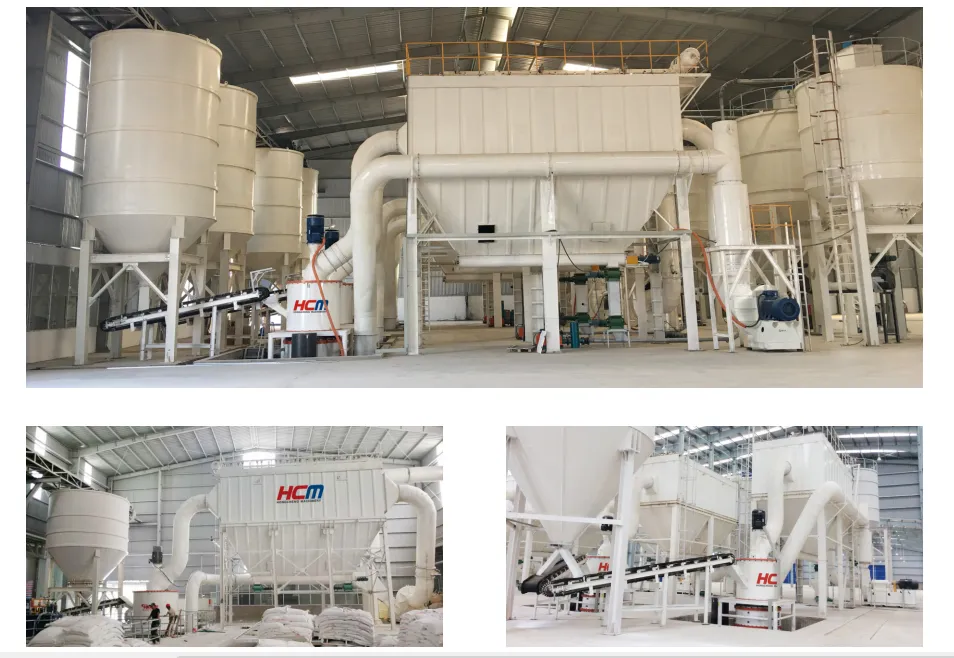
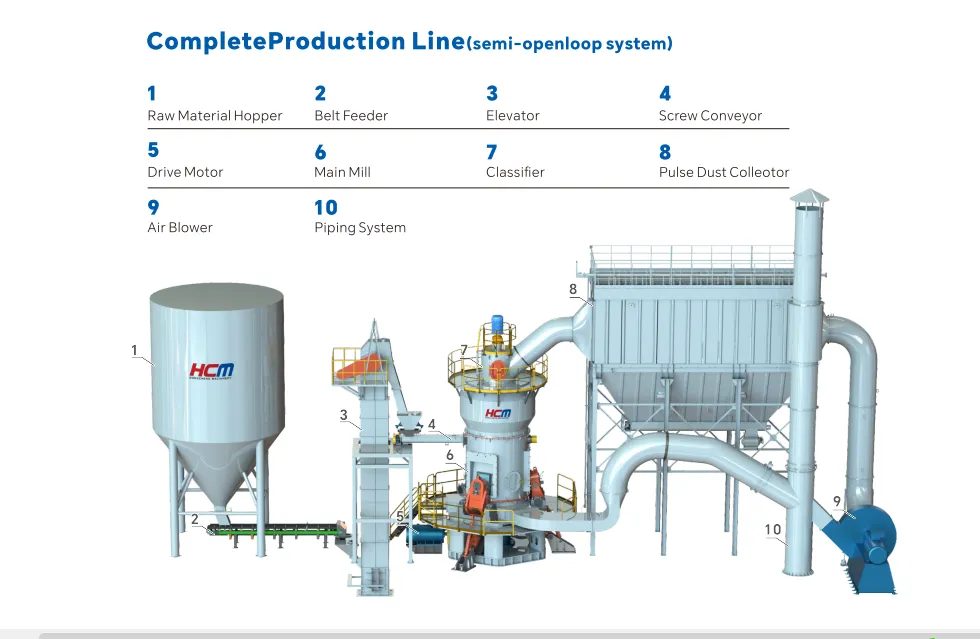
The equipment cost — the mill, classifier, drive system, lubrication system, and control panel — typically accounts for 55 to 70 percent of the total installed cost. Ancillary equipment — crushers, conveyors, bucket elevators, product collection bag filters, fans, and ductwork — adds another 15 to 25 percent. Civil works, including foundations, pits, and the mill building, account for roughly 10 to 15 percent.
Installation labor and commissioning add 5 to 10 percent. Freight and insurance, depending on distance and mill size, can range from 3 to 8 percent of the equipment value for ocean freight, or substantially more for urgent air freight of critical components.
Some manufacturers quote an ex-works price for the mill only, while others include the complete grinding system — mill, classifier, fan, ductwork, collection system, and controls. When comparing quotations, verify the scope boundary carefully. A lower-priced quotation that excludes the bag filter and fan is not genuinely cheaper — it is simply pushing those items into a separate purchase order, often at a higher total cost due to integration inefficiencies.
5. The Performance Guarantee: What It Should Cover
A credible grinding mill manufacturer will provide a performance guarantee — a contractual commitment that the equipment, when properly installed and operated, will achieve specified performance metrics. The guarantee should be specific, measurable, and tied to defined test conditions.
The core guarantee typically covers throughput at a defined fineness — for example, "the mill shall produce not less than 15 tons per hour of limestone powder with a D97 passing 325 mesh (44 µm) when processing feed material as defined in the material specification appendix." It should also cover specific power consumption — "specific energy consumption at guaranteed throughput shall not exceed 25 kWh per ton" — and product quality parameters if relevant, such as iron contamination limits or particle size distribution breadth.
The guarantee should specify the test conditions: the duration of the performance test (typically 24 to 72 hours of continuous operation), the feed material specification that must be met, and the measurement methods for throughput, fineness, and power. It should also define the remedies if the guarantee is not met — whether that means equipment modifications at the manufacturer's cost, a price adjustment, or, in the worst case, return of the equipment.
Guilin Hongcheng Mining Equipment Manufacturing includes a written performance guarantee with each equipment supply contract, specifying throughput, fineness, and energy consumption targets validated against the grindability test report performed on the customer's material sample.
6. The Procurement Timeline: From Inquiry to Commissioning
Procuring a grinding mill is not a quick process, and unrealistic timeline expectations lead to rushed decisions and compromised outcomes. A realistic timeline from initial inquiry to stable commercial production spans roughly 6 to 12 months, depending on mill size and complexity.
The sequence typically runs as follows: material testing and technical proposal, 2 to 4 weeks from sample submission; commercial negotiation and contract, 2 to 4 weeks; engineering design and drawing approval, 4 to 6 weeks; manufacturing, 10 to 16 weeks for a standard mid-sized mill (larger or highly customized mills can take 20 to 30 weeks); shipping, 4 to 8 weeks depending on destination; civil works, 4 to 8 weeks (can run in parallel with manufacturing and shipping); installation, 4 to 8 weeks; commissioning, 2 to 4 weeks.
For common mill sizes in the HLM and HC product ranges, Hongcheng maintains partially completed assemblies that can accelerate the manufacturing phase by 3 to 5 weeks for urgent projects. However, even with accelerated manufacturing, the total timeline is rarely compressed below roughly 5 to 6 months from order to commercial production — a constraint imposed by shipping, civil works, and commissioning physics rather than manufacturing speed.
7. Avoiding the Five Most Common Procurement Mistakes
Drawing from hundreds of installations and the troubleshooting calls that follow problematic ones, certain patterns emerge. These are the mistakes that recur across industries, geographies, and mill types.
Buying on price alone is the most common and most damaging. A mill that costs 20 percent less to purchase but consumes 30 percent more electricity and requires 50 percent more maintenance hours will erase its purchase price advantage within roughly 2 to 3 years and cost more every year thereafter. The procurement evaluation should use a 5-year or 10-year total cost of ownership model, not an ex-works price comparison.
Skipping the material test is the second most common error. Without a grindability test, the manufacturer is sizing the mill based on assumptions, and you are signing a contract based on those assumptions. The cost of a grindability test is trivial — often zero — compared to the cost of a mis-sized mill.
Underestimating infrastructure requirements is the third. The mill needs a foundation, power supply, water, compressed air, dust collection ductwork, and material handling integration. These items are rarely included in the manufacturer's equipment quotation but can easily add 25 to 40 percent to the total project cost. Budget for them from the start, and ensure the mill building design accommodates the installed height and maintenance access requirements of the specific mill model.
Fourth, neglecting operator training. A grinding mill is not a push-button appliance. Operators need to understand feed rate control, classifier adjustment, hydraulic pressure management, and the warning signs of impending problems. Budget for at least one week of on-site training during commissioning, and ideally send one or two senior operators to the manufacturer's facility for hands-on training before the equipment ships.
Fifth, failing to plan for spare parts. Every grinding mill has wear components that will need replacement — rollers, table liners, classifier blades, seals, bearings. Ordering the first set of critical spares with the initial equipment order ensures they arrive before they are needed, often at a bundled discount, and eliminates the risk of an extended shutdown waiting for a single component to be manufactured and shipped.
8. Frequently Asked Questions
8.1 Should I visit the manufacturer's factory before placing an order?
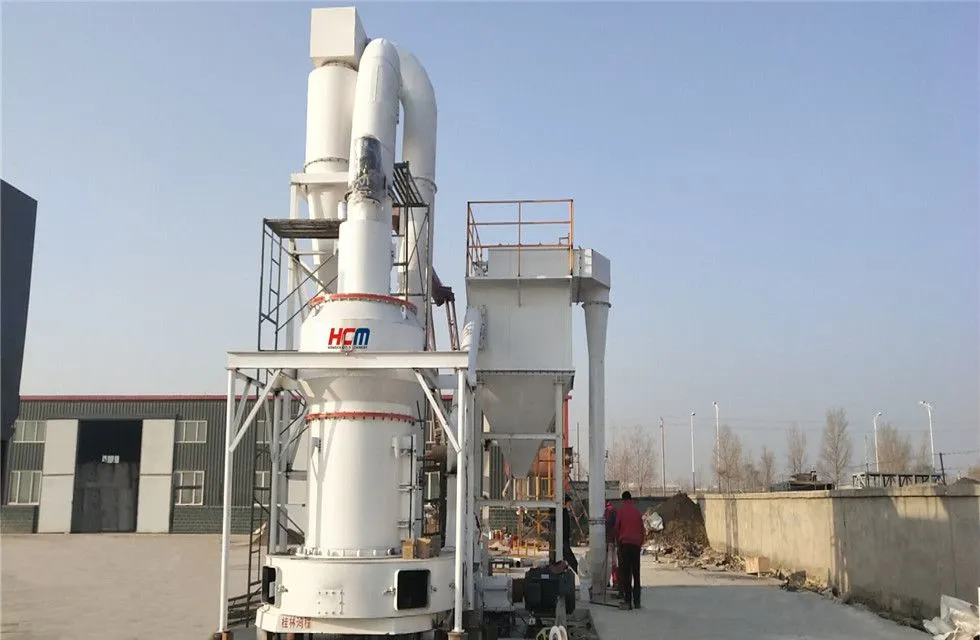
For a capital investment of this magnitude — a complete grinding line typically costs $100,000 to well over $500,000 depending on size and configuration — a factory visit is strongly recommended. Seeing the manufacturing facility gives you direct evidence of production capabilities, quality control processes, and the level of engineering support behind the quotation. It also allows you to witness a test grind of your material, meet the engineering team who will design your specific mill configuration, and assess whether the manufacturer's operation matches the scale and professionalism implied by the sales materials. Most manufacturers, including Hongcheng, welcome factory visits and will arrange technical discussions and test demonstrations as part of the visit.
8.2 How do I verify a manufacturer's claimed reference installations?
Ask for contact information for at least three reference installations processing similar materials — ideally at least one that has been operating for more than three years. When contacting the reference, ask specific questions: How closely did the installed mill match the promised throughput? What was the actual commissioning timeline versus the plan? How responsive was the manufacturer when problems arose?
What is the actual wear part replacement interval versus what was quoted? A reference who has had a problem and can describe how the manufacturer resolved it is more valuable than one who claims everything was perfect.
8.3 What payment terms are standard for grinding mill purchases?
Standard terms for industrial equipment of this scale are typically 30 percent with order placement, 30 to 40 percent upon completion of manufacturing and before shipment (verified by photos, video, or inspection), and the remaining 30 to 40 percent upon successful commissioning or within a defined period after shipment. Some manufacturers offer letter of credit terms for export transactions. Avoid suppliers demanding 100 percent payment upfront or before shipment — this transfers all risk to the buyer and removes any commercial leverage to ensure the equipment performs as promised.
8.4 Can I buy a used grinding mill instead of a new one?
Used grinding mills exist in the market, often from decommissioned plants, and can represent a significant capital saving — typically 40 to 60 percent below new equipment price. However, the risks are substantial: wear on critical components may not be visible without disassembly, the mill was sized for a different material and may not match your application, and there is no manufacturer warranty or performance guarantee. If you pursue the used route, insist on a thorough inspection by an independent engineer familiar with grinding equipment, budget for a complete wear part replacement, and verify that spare parts are still available from the original manufacturer before committing.
8.5 What happens if the mill performs below the guaranteed specification during commissioning?
The performance guarantee should define the remedies, but the typical sequence is: the manufacturer is given an opportunity to adjust, reconfigure, or replace components to bring the mill into specification — at their cost, including any required site labor. If after a defined period (typically 30 to 60 days) the mill still does not meet the guarantee, commercial remedies apply, ranging from a price reduction proportional to the performance shortfall to, in extreme cases, acceptance of equipment return. This is why the performance guarantee language in the contract matters — it is not boilerplate, it is the mechanism that aligns the manufacturer's commercial interest with your operational outcome.
Recently Posted
-
Limestone Powder Production: Complete Grinding Solutions from 200 Mesh to 1250 Mesh
August 12, 2026A construction materials supplier in Southeast Asia signed a contract to provide limestone powder to three different customers: a Read More
 -
Vertical Mill vs Raymond Mill: Which Grinding Solution Fits Your Production Line
August 10, 2026A calcium carbonate plant in the Middle East ran two identical production lines for three years — one equipped with a vertical gri Read More
 -
What Is a Vertical Grinding Mill: Working Principle and Key Components Explained
August 7, 2026In 2019, a limestone processing plant in Southeast Asia purchased what they believed was the right grinding equipment for their ne Read More
 -
Why HC Series Pendulum Mill Solves Severe Vibration Issues of Traditional Raymond Mill
June 10, 2026HCM HC series pendulum mill optimizes traditional Raymond mill structure, cast integrated base, balanced rotary Read More

Contact Us
Recommended Products
-
 HCM Ultrafine Vertical Roller Mill Produces 1250 Mesh Ultrafine Calcium Carbonate PowderNegotiableMOQ: 1 Combo
 -
China HCM Manufacturer HLM2000 Vertical Coal Mill - 200 Mesh, 28 Ton/HourNegotiableMOQ: 1 Combo
-
10 TPH 180 Mesh Coal Grinding Mill | HC1500 Open Circuit Raymond Mill for Power PlantNegotiableMOQ: 1 Combo
-
HCM China HLM1700 Large Vertical Roller Mill for Water Slag Grinding | 325 Mesh 99% Passing Rate, 10-15t/h OutputNegotiableMOQ: 1 Combo
-
HCM 1850 Raymond Mill for Petroleum Coke | 6 TPH @200 Mesh, 30% Less Power ConsumptionNegotiableMOQ: 1 Combo
-
Low Maintenance Cost China Raymond Mill, Versatile Raymond Roller Mill For Various Non-Metallic OresNegotiableMOQ: 1 Combo
-
Large Industrial Stone Mills - Industrial Powder Grinding Machine | High Efficiency Low Energy Consumption Mill Industrial for Mineral ProcessingNegotiableMOQ: 1 Combo
-
HCM Mill Roller Machine Raymond Roller Mill Roller Mill Equipments 20t/h Limestone Grinder to 200 MeshNegotiableMOQ: 1 Combo
-
HCM HLMX Ultrafine Vertical Mill | 700,000 TPY High-Grade Calcium Carbonate Production LineNegotiableMOQ: 1 Combo
-
The HCM Limestone Ultrafine Powder Processing Equipment, the HLMX Ultrafine Vertical Mill, Can Efficiently Produce Ultrafine Limestone Powder.NegotiableMOQ: 1 Combo
-
China HCM Bentonite Ore Raymond Pulverizer, Professional Ceramic Grade 200 Mesh Bentonite Powder Making Machine, 20 Ton Per Hour Grinding CapacityNegotiableMOQ: 1 Combo
-
6t/h High Output Fluorite Ore Grinder HCM HCH Ring Roller Mill 325 Mesh D95 Fineness Industrial PulverizerNegotiableMOQ: 1 Combo
-
High Efficiency HCM Vertical Mill Bauxite Grinding Plant 44 Ton Per HourNegotiableMOQ: 1 Combo
-
Customized Lepidolite Grinding Production Line 30TPH Vertical Roller Mill for Battery Grade Lithium Mineral ProcessingNegotiableMOQ: 1 Combo
-
HCM S95-grade Blast Furnace Slag Grinding Mill, Achieving a Fineness of 430 Specific Surface Area With a Production Capacity of 40 T/hNegotiableMOQ: 1 Combo
-
HCM Ultrafine Vertical Mill,ultrafine Powder Vertical Mill for Artificial Stone Production LineNegotiableMOQ: 1 Combo
-
Industrial Dolomite Raymond Mill HCM 1300 Energy Saving Fine Grinding Machine for Building Material Filler PowderNegotiableMOQ: 1 Combo
-
HCM Titanium Dioxide Grinding Equipment Manufacturer | 80-3000 Mesh FinenessNegotiableMOQ: 1 Combo
-
HCM Calcined Vanadium Titanium Slag Ultrafine Grinding Equipment | HLM Vertical Mill | 20 TPH CapacityNegotiableMOQ: 1 Combo
-
Bauxite Fine Processing Machine for Refractory/Ceramic/Abrasive | 325-2500 Mesh Powder Making PlantNegotiableMOQ: 1 Combo