
 Business License
Vertical Mill vs Raymond Mill: Which Grinding Solution Fits Your Production Line
A calcium carbonate plant in the Middle East ran two identical production lines for three years — one equipped with a vertical grinding mill, the other with a Raymond mill. The plant manager tracked every metric: throughput, power consumption, maintenance hours, product consistency. After 36 months of side-by-side operation, the vertical mill line had processed roughly 28 percent more material while consuming 22 percent less electricity per ton. But the Raymond mill line had cost 40 percent less to purchase and required less specialized operator training.
Neither machine was "better" in an absolute sense. Each was right for a different set of operating conditions — and the plant only discovered which was which by running both.
Most operations do not have the luxury of a side-by-side trial. The decision between a vertical mill and a Raymond mill must be made upfront, based on technical specifications, application requirements, and long-term operating economics. This article lays out a structured comparison across the dimensions that matter most: grinding mechanism, throughput, product quality, energy use, maintenance, and total cost of ownership.
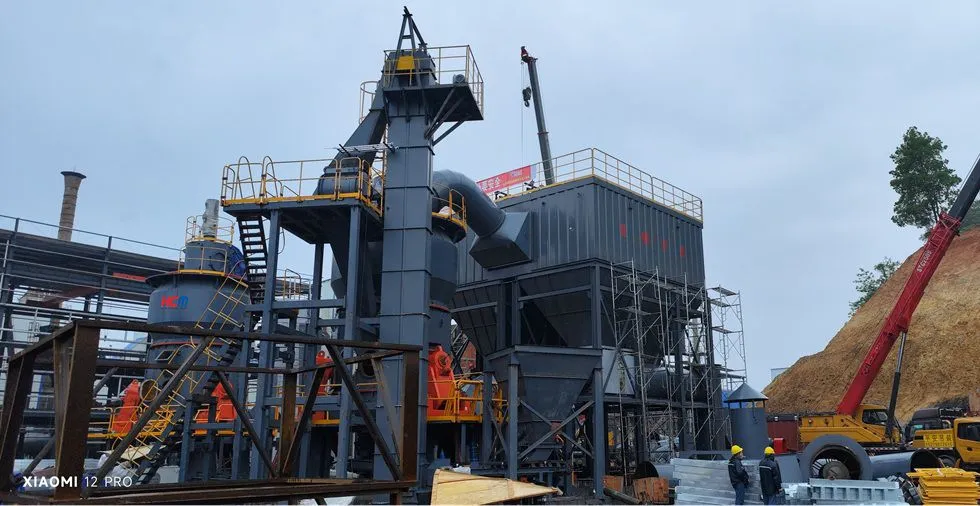
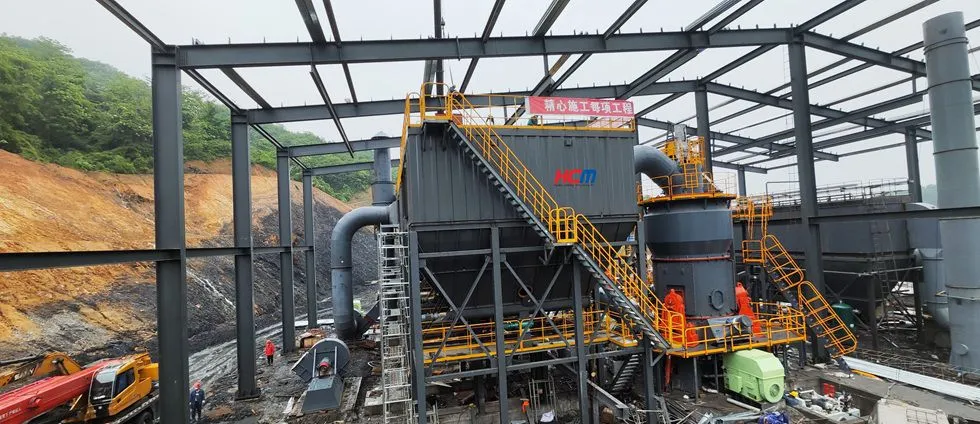
1. The Fundamental Difference: Grinding Mechanism
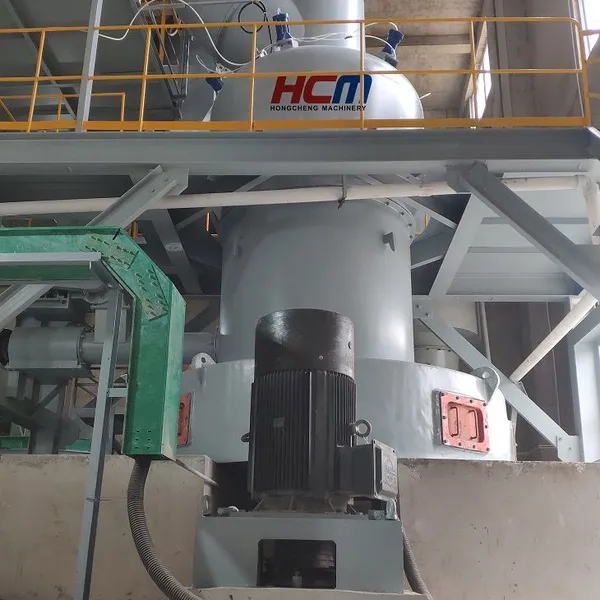
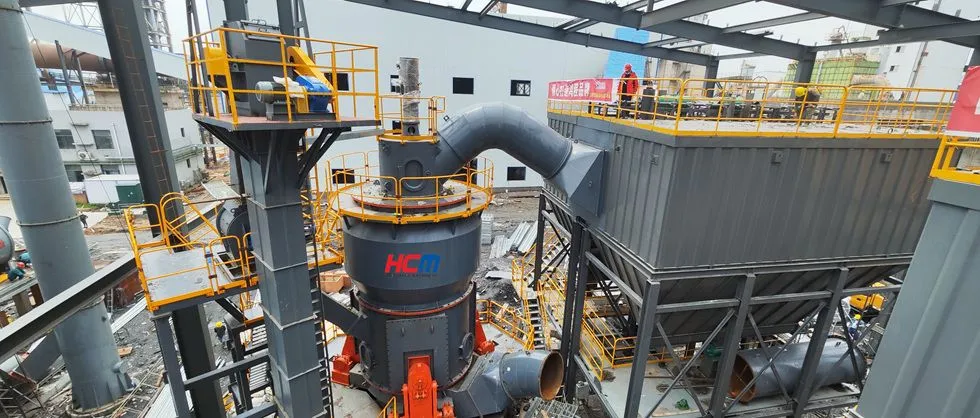
The defining technical distinction between a vertical mill and a Raymond mill lies in how each machine applies force to the material. In a vertical grinding mill, a horizontally rotating table carries the feedstock under a set of hydraulically-loaded rollers. The rollers are relatively stationary — they rotate on their own axes but do not orbit the table — and they press downward, crushing the material bed through compressive force. The grinding pressure is adjustable and can be precisely controlled, typically in the range of 40 to 200 kilonewtons per roller depending on machine size.
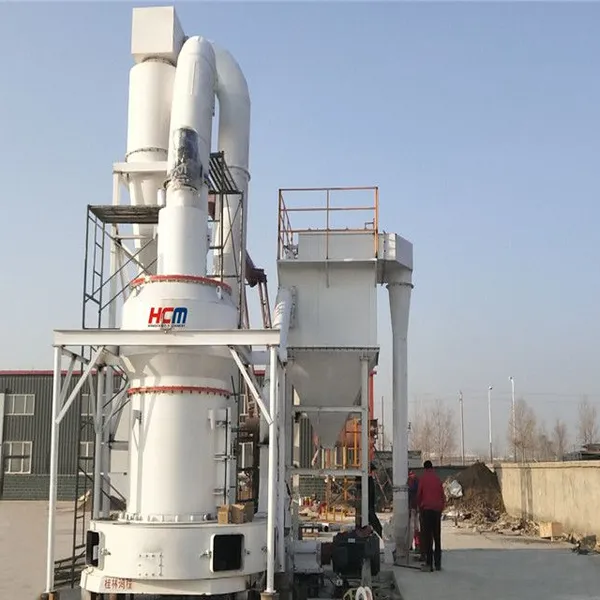
A Raymond mill — more precisely called a pendulum grinding mill — operates on a fundamentally different principle. A set of grinding rollers is suspended from a central vertical shaft that rotates at relatively high speed. Centrifugal force throws the rollers outward against a stationary grinding ring that lines the inner wall of the mill housing. The material is crushed between the roller and the ring through a combination of centrifugal pressure and the roller's own weight.
The grinding force is not hydraulically controlled — it depends almost entirely on the rotational speed of the central shaft and the mass of the roller assembly.
This mechanism difference cascades into nearly every other performance parameter. The compressive, adjustable-pressure design of the vertical mill gives it an inherent advantage in throughput, energy efficiency, and the ability to handle larger feed sizes. The pendulum design of the Raymond mill, with its simpler mechanical layout and lower manufacturing cost, trades some of that performance for a more accessible price point.
Hongcheng manufactures both types — the HLM series vertical mills and the HC series Raymond mills — and the engineering team often advises customers that understanding the grinding mechanism is the single most important factor in making the right choice.
2. Throughput and Capacity Comparison
For the same installed motor power, a vertical grinding mill reliably delivers higher throughput than a Raymond mill. The advantage comes from several design factors: the larger grinding surface area provided by the table-and-roller configuration, the ability to apply higher and more consistent grinding pressure, and the integrated air classification that reduces recirculation of already-fine material.
To make this comparison concrete, the table below shows typical throughput ranges for equivalently-powered vertical and Raymond mills processing limestone to the same target fineness.
| Motor Power | Vertical Mill (HLM) Throughput | Raymond Mill (HC) Throughput | Throughput Advantage |
|---|---|---|---|
| 75 kW | 3 – 6 tons/hour | 2 – 4 tons/hour | Roughly 30-50% higher |
| 160 kW | 8 – 15 tons/hour | 5 – 10 tons/hour | Roughly 40-60% higher |
| 315 kW | 18 – 30 tons/hour | 12 – 20 tons/hour | Roughly 35-50% higher |
| 500 kW | 30 – 50 tons/hour | 20 – 32 tons/hour | Roughly 30-55% higher |
The throughput gap tends to widen for harder materials. When grinding materials with a Bond Work Index above roughly 12 kWh/t — typical of dolomite, barite, or certain grades of limestone — the vertical mill's hydraulic loading system maintains consistent pressure even as material resistance increases. The Raymond mill's centrifugal grinding force, by contrast, is effectively fixed at a given shaft speed and cannot compensate for tougher feed. The result: on harder materials, the throughput advantage of the vertical mill can reach 60 percent or more.
3. Feed Size and Material Handling
Feed size capability is another area where the two machine types diverge. A vertical grinding mill can accept considerably larger feed material. The open table design allows lumps up to roughly 50 to 80 millimeters to be fed directly into the grinding zone without pre-crushing. This means a vertical mill can often be fed directly from a jaw crusher or even, for softer materials, from the mine or quarry without an intermediate crushing stage.
A Raymond mill is more restrictive on feed size. The grinding ring-and-roller geometry leaves limited clearance for large particles, and feed material must typically be reduced to below roughly 30 to 40 millimeters — and ideally below 25 millimeters — before entering the mill. This usually requires a two-stage crushing setup upstream of the mill, adding capital equipment and operational complexity.
There is also a difference in how the two machines handle feed moisture. The vertical mill's integrated hot gas system can simultaneously grind and dry materials with moisture contents of up to roughly 15 percent. The Raymond mill can handle some moisture — typically up to roughly 8 to 10 percent — but beyond that threshold, the material tends to form a paste on the grinding ring, reducing throughput and accelerating wear. For materials like wet limestone or freshly quarried gypsum, the vertical mill's drying capability can eliminate the need for a dedicated dryer.
4. Product Fineness and Particle Size Control
Both vertical and Raymond mills can produce powders across a wide fineness range, but the achievable range and the ease of controlling it differ. The table below summarizes the practical operating ranges for each technology.
| Fineness Metric | Vertical Mill (HLM) | Raymond Mill (HC) |
|---|---|---|
| Standard grinding range | 200 – 400 mesh (75 – 38 µm) | 80 – 400 mesh (180 – 38 µm) |
| Extended fine range | Up to 800 mesh (18 µm) with adjustments | Up to 500 mesh (25 µm) with multi-stage |
| Particle size distribution control | Dynamic classifier with variable-speed rotor; D90/D10 typically 2.5 – 3.5 | Static or dynamic classifier; D90/D10 typically 3.0 – 5.0 |
| Fineness adjustment method | Adjust classifier rotor speed (50 – 300 RPM range) | Adjust classifier vane angle or rotor speed |
The vertical mill's integrated dynamic classifier with a variable-speed rotor gives operators finer and more repeatable control over the product cut point. Turning a dial or adjusting a frequency drive changes the cut size within minutes, without shutting down the mill. The Raymond mill, depending on its classifier configuration, may require manual adjustment of vane angles or even replacement of classifier components to shift between fineness targets — a process that typically takes several hours of downtime.
For applications where particle size distribution consistency is critical — such as filler-grade calcium carbonate for paints and coatings — the vertical mill's classification precision is often the deciding factor. Guilin Hongcheng Mining Equipment Manufacturing has documented cases where automotive coating manufacturers rejected Raymond-milled calcium carbonate because the coarse tail in the particle size distribution caused visible surface defects, but accepted vertical-milled material from the same quarry with no reformulation required.
5. Energy Consumption and Operating Cost
Energy is typically the largest single operating cost in a mineral grinding operation, so the efficiency difference between mill types carries substantial financial weight. A vertical mill's compressive grinding mechanism is inherently more energy-efficient than the centrifugal-shear action of a Raymond mill. The numbers bear this out consistently across different applications.
For limestone grinding to 325 mesh, a vertical mill typically consumes between 18 and 25 kilowatt-hours per ton of product. A Raymond mill performing the same job will typically use between 25 and 35 kWh per ton — roughly 30 to 40 percent more. For a plant processing 150,000 tons per year, that difference translates to roughly 1.1 to 1.5 million additional kilowatt-hours annually, or approximately $80,000 to $180,000 in extra electricity cost depending on local rates.
However, the operating cost picture is not one-sided. The Raymond mill's simpler mechanical design means that when repairs are needed, they are generally faster and require less specialized labor. The annual maintenance labor cost for a Raymond mill can be 20 to 30 percent lower than for a vertical mill of equivalent capacity, partly offsetting the energy penalty in regions with low electricity prices and high skilled labor costs.
6. Wear Parts and Maintenance Profile
The maintenance requirements of each mill type follow directly from their mechanical designs. The table below provides a side-by-side comparison of wear component life and replacement complexity.
| Maintenance Factor | Vertical Mill (HLM) | Raymond Mill (HC) |
|---|---|---|
| Roller service life (limestone) | 8,000 – 15,000 hours | 5,000 – 10,000 hours |
| Wear ring/liner life (limestone) | 8,000 – 15,000 hours | 6,000 – 12,000 hours |
| Roller replacement method | Hydraulic swing-out or crane lift; segmented rollers allow partial swaps | Manual disassembly of roller assembly; typically full roller replacement |
| Typical major overhaul interval | 12,000 – 20,000 hours | 8,000 – 15,000 hours |
| Daily operator attention | Monitor hydraulic pressure, bearing temps, classifier current | Monitor vibration, bearing temps, product fineness |
One practical advantage of the vertical mill in maintenance planning is the hydraulic roller swing-out mechanism available on most modern designs. When roller replacement is needed, the hydraulic system lifts and swings each roller out of the mill housing, giving maintenance crews direct access without dismantling the mill body. This can reduce roller replacement downtime from two to three days to roughly 8 to 12 hours. The Raymond mill generally requires the top housing to be lifted off to access rollers, making the same job a 1.5 to 2.5-day affair.
Hongcheng's service data indicates that over a five-year operating horizon, a vertical mill in limestone service accumulates roughly 15 to 25 percent fewer total maintenance hours than a Raymond mill, though the per-hour maintenance cost — factoring in more expensive hydraulic system components — tends to be higher.
7. Installation Footprint, Infrastructure, and Upfront Cost
The Raymond mill typically wins on initial capital expenditure and installation simplicity. A mid-sized Raymond mill — capable of 8 to 12 tons per hour of limestone at 325 mesh — might cost roughly 30 to 40 percent less to purchase than a vertical mill of equivalent capacity. The foundation requirements are also simpler: a Raymond mill needs a concrete foundation capable of supporting the mill body and absorbing vibration, but does not require the deep pit often needed for the vertical mill's gearbox and reject handling system beneath the grinding table.
A vertical mill, by contrast, requires a more substantial civil engineering setup. The mill is taller — typically 8 to 15 meters for mid-sized units — and the foundation must accommodate the gearbox pit, the hot gas ductwork below the table, and the reject removal system. The overall installed height, including the classifier housing on top, can reach 15 to 25 meters. This may require a taller building or an outdoor installation with weather protection for the drive system.
However, the vertical mill's compact footprint at ground level partly offsets the height penalty. A 20-ton-per-hour vertical mill might occupy roughly 60 to 80 square meters of floor space, while a Raymond mill and its associated air system often spread over 100 to 150 square meters.
HCM's project engineering team typically advises clients to budget roughly 25 to 35 percent more upfront capital for a vertical mill installation compared to a Raymond mill of similar throughput, but to expect the differential to be recovered through energy savings within roughly 2 to 4 years of continuous operation.
8. Application Suitability: A Decision Matrix
Neither machine is universally superior. The right choice depends on which combination of application requirements matters most. The decision matrix below maps typical application scenarios to the more suitable technology based on field experience across hundreds of installations.
| Application Scenario | Better Fit | Reason |
|---|---|---|
| Throughput above 15 tons/hour, limestone to 325 mesh | Vertical Mill | Higher capacity per installed kW; better energy economics at scale |
| Throughput below 8 tons/hour, moderate fineness | Raymond Mill | Lower upfront cost; simpler operation; energy penalty less significant at smaller scale |
| Feed moisture above 10 percent, no pre-dryer available | Vertical Mill | Integrated hot gas drying handles up to ~15% moisture without separate equipment |
| Product fineness 400-800 mesh with narrow PSD requirement | Vertical Mill | Dynamic classifier with variable-speed rotor gives tighter cut control |
| Feed size above 40 mm, single-stage crushing preferred | Vertical Mill | Accepts feed up to ~50-80 mm directly |
| Tight initial capital budget, lower labor costs | Raymond Mill | 30-40% lower equipment cost; energy penalty offset by cheap power or inexpensive labor |
| Plant in remote location with limited skilled maintenance staff | Raymond Mill | Simpler hydraulic-less design; easier for general mechanics to maintain |
For operations that fall between these clear-cut scenarios — for instance, a plant needing roughly 10 to 12 tons per hour with moderate fineness requirements — the decision often comes down to the relative cost of electricity versus capital, and whether future expansion plans favor the modular scalability that vertical mills offer. The company encourages prospective buyers to send material samples for test grinding, which provides empirical throughput and energy data specific to the actual feedstock, eliminating guesswork from the decision.
9. Real-World Example: Two Plants, Two Choices
A barite processing operation in Mexico elected to install Raymond mills when it started production in 2017. The operation needed roughly 6 tons per hour of barite powder for oil drilling applications at 200 mesh. The Raymond mill met the throughput target, and the lower equipment cost allowed the company to bring a second line online within 18 months. Today the plant runs three Raymond mills and has never exceeded 15 tons per hour total — well within the comfort zone of pendulum grinding technology.
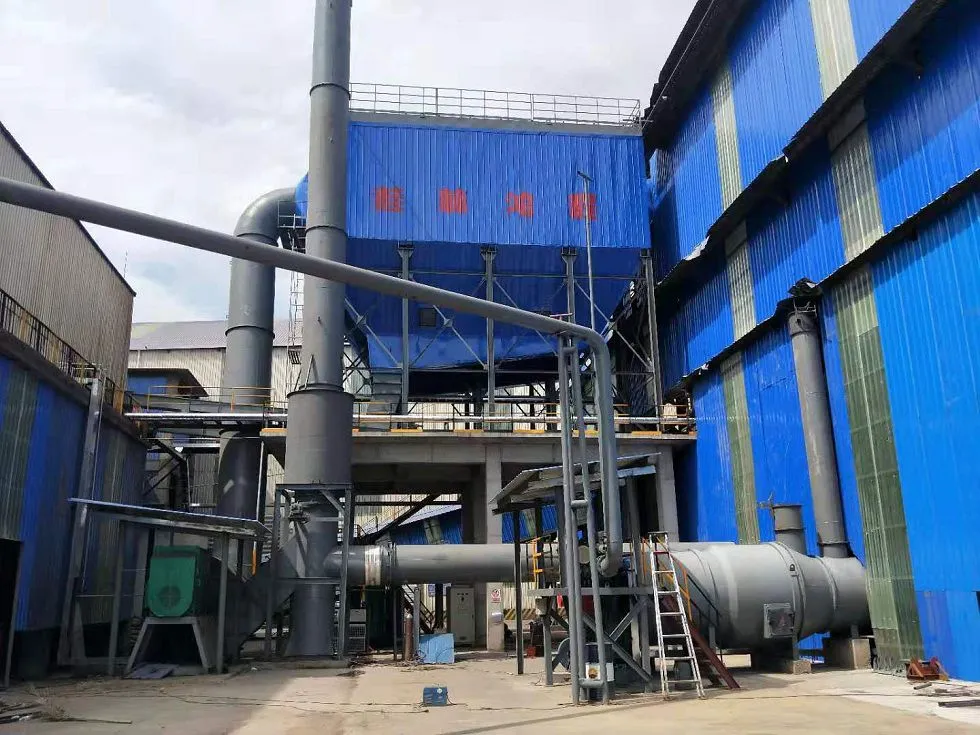
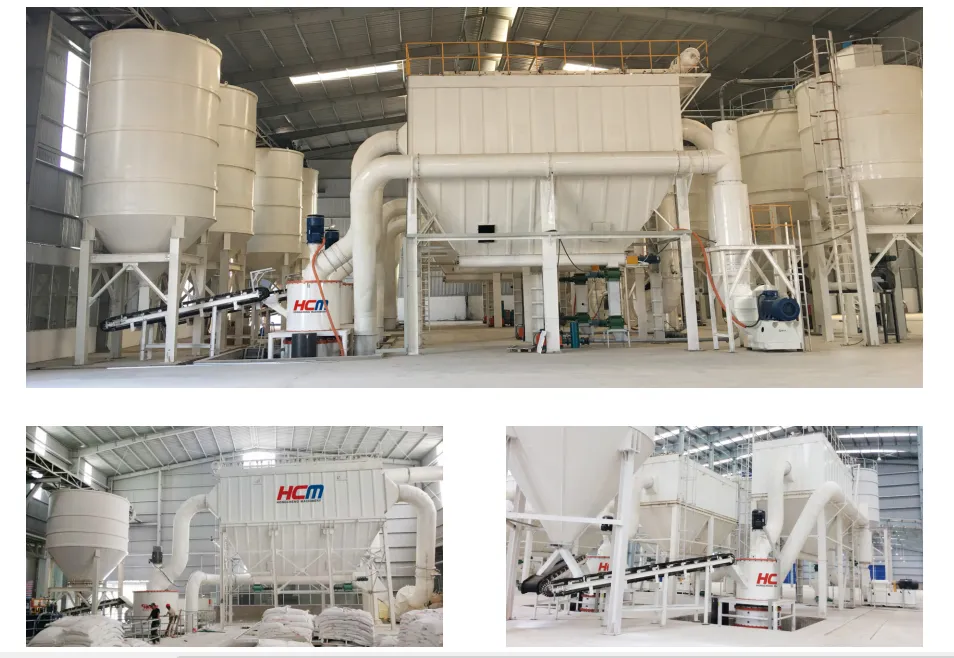
Meanwhile, a limestone desulfurization powder plant in Turkey, commissioned in 2020, needed 35 tons per hour at 325 mesh to supply a nearby coal-fired power station. A Raymond mill at that throughput would have required multiple parallel units and significantly higher energy consumption. The vertical mill solution — a single HLM 2400 unit from Guilin Hongcheng Mining Equipment Manufacturing — met the entire requirement from one machine, operating at roughly 22 kWh per ton. The plant manager estimates that three Raymond mills would have consumed roughly 30 to 33 kWh per ton for the same output, and would have required roughly 50 percent more floor space.
10. Frequently Asked Questions
10.1 Can a Raymond mill be upgraded to match vertical mill performance?
Certain upgrades can narrow the performance gap — adding a dynamic classifier in place of a static one improves fineness control, and upgrading the drive to a variable-frequency unit allows speed optimization for different materials — but the fundamental mechanical architecture of the pendulum grinding mechanism imposes a ceiling. Even a heavily upgraded Raymond mill will not match a vertical mill of equivalent motor power in terms of throughput or energy efficiency, because the centrifugal grinding force cannot be increased independently of shaft speed, and the grinding contact area between roller and ring is geometrically limited compared to a table-and-roller system.
10.2 Which mill type is easier to operate on a day-to-day basis?
A Raymond mill is generally simpler to operate. The primary control variables are feed rate, shaft speed, and classifier setting — and the shaft speed is often fixed. A vertical mill adds hydraulic pressure management, mill differential pressure monitoring, gas flow rate control, and sometimes vibration monitoring tied to the hydraulic system.
Operators with experience on simpler grinding equipment typically need one to two weeks of training to operate a Raymond mill competently, and roughly four to six weeks for a vertical mill. However, modern PLC-based control systems on vertical mills automate much of the parameter management that used to require constant operator attention.
10.3 Is there a throughput threshold where switching from Raymond to vertical always makes sense?
Industry experience suggests that at sustained throughputs above roughly 10 to 12 tons per hour for medium-hard materials, the energy savings of a vertical mill begin to outweigh its higher capital cost within a reasonable payback period of 2 to 4 years. Below roughly 8 tons per hour, the Raymond mill's lower capital investment usually makes better economic sense, unless there are other compelling reasons — such as strict particle size distribution requirements or high feed moisture — that favor the vertical architecture.
10.4 Do vertical mills and Raymond mills produce powder with the same particle shape?
They do not. The compressive grinding mechanism of a vertical mill tends to produce particles with a more angular, fractured morphology, while the centrifugal-shear action of a Raymond mill generates somewhat more rounded particles. For most industrial applications — cement, construction materials, general mineral fillers — the difference is negligible. However, in certain high-end filler applications where particle morphology affects rheological properties in polymers or coatings, the distinction can matter and should be verified through test grinding and application testing.
10.5 Can I process the same range of materials with both mill types?
Broadly yes, but with caveats. Both mills handle limestone, calcite, dolomite, barite, gypsum, coal, and similar medium-hard minerals. Materials at the extreme ends of the hardness or abrasiveness spectrum — very hard ores like quartzite, or highly abrasive industrial slags — are better suited to the vertical mill because of its heavier construction, hydraulic pressure control, and more robust wear protection systems. Conversely, very soft or heat-sensitive materials may overgrind in a vertical mill's higher-pressure environment, and a Raymond mill's gentler pendulum action can be preferable.
Recently Posted
-
Limestone Powder Production: Complete Grinding Solutions from 200 Mesh to 1250 Mesh
August 12, 2026A construction materials supplier in Southeast Asia signed a contract to provide limestone powder to three different customers: a Read More
 -
How to Buy an Industrial Grinding Mill: A Step-by-Step Procurement Guide
August 11, 2026In 2021, a mineral processing company in East Africa ordered a grinding mill from a supplier they had found through an online trad Read More
 -
What Is a Vertical Grinding Mill: Working Principle and Key Components Explained
August 7, 2026In 2019, a limestone processing plant in Southeast Asia purchased what they believed was the right grinding equipment for their ne Read More
 -
Why HC Series Pendulum Mill Solves Severe Vibration Issues of Traditional Raymond Mill
June 10, 2026HCM HC series pendulum mill optimizes traditional Raymond mill structure, cast integrated base, balanced rotary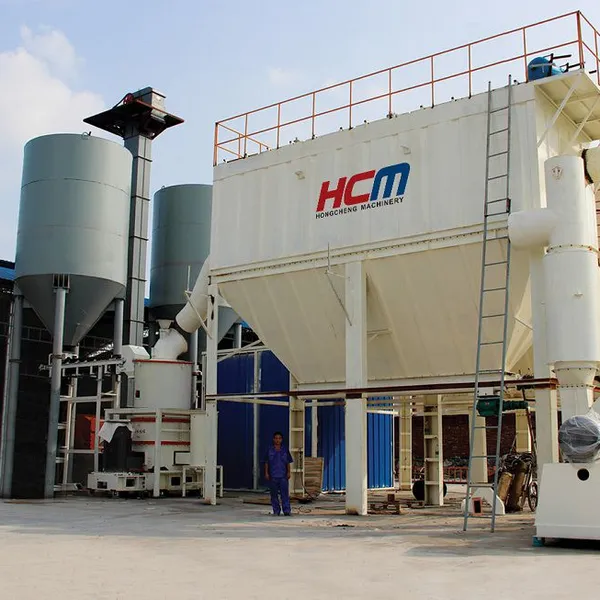 Read More

Contact Us
Recommended Products
-
 HCM Ultrafine Vertical Roller Mill Produces 1250 Mesh Ultrafine Calcium Carbonate PowderNegotiableMOQ: 1 Combo
 -
China HCM Manufacturer HLM2000 Vertical Coal Mill - 200 Mesh, 28 Ton/HourNegotiableMOQ: 1 Combo
-
10 TPH 180 Mesh Coal Grinding Mill | HC1500 Open Circuit Raymond Mill for Power PlantNegotiableMOQ: 1 Combo
-
HCM China HLM1700 Large Vertical Roller Mill for Water Slag Grinding | 325 Mesh 99% Passing Rate, 10-15t/h OutputNegotiableMOQ: 1 Combo
-
HCM 1850 Raymond Mill for Petroleum Coke | 6 TPH @200 Mesh, 30% Less Power ConsumptionNegotiableMOQ: 1 Combo
-
Low Maintenance Cost China Raymond Mill, Versatile Raymond Roller Mill For Various Non-Metallic OresNegotiableMOQ: 1 Combo
-
Large Industrial Stone Mills - Industrial Powder Grinding Machine | High Efficiency Low Energy Consumption Mill Industrial for Mineral ProcessingNegotiableMOQ: 1 Combo
-
HCM Mill Roller Machine Raymond Roller Mill Roller Mill Equipments 20t/h Limestone Grinder to 200 MeshNegotiableMOQ: 1 Combo
-
HCM HLMX Ultrafine Vertical Mill | 700,000 TPY High-Grade Calcium Carbonate Production LineNegotiableMOQ: 1 Combo
-
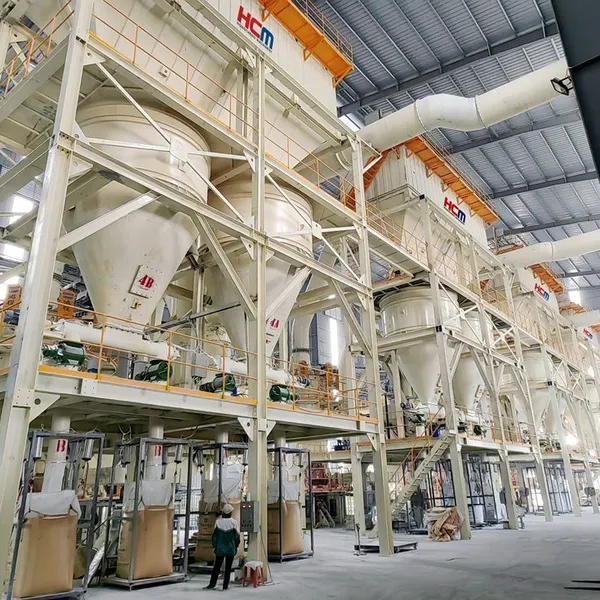
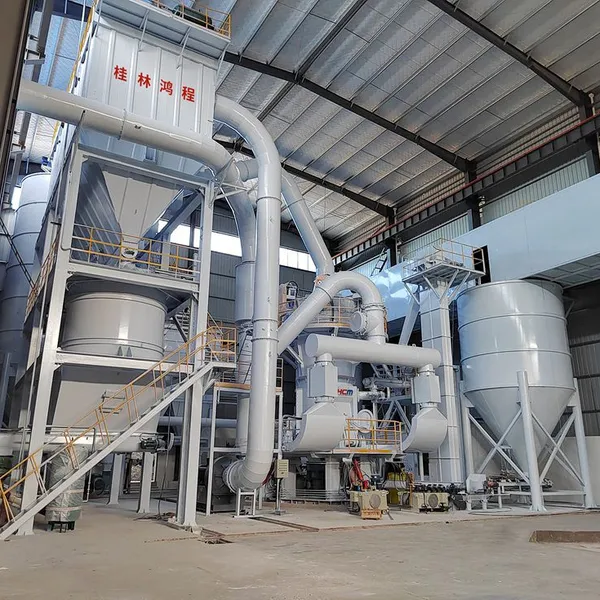
The HCM Limestone Ultrafine Powder Processing Equipment, the HLMX Ultrafine Vertical Mill, Can Efficiently Produce Ultrafine Limestone Powder.NegotiableMOQ: 1 Combo
-
China HCM Bentonite Ore Raymond Pulverizer, Professional Ceramic Grade 200 Mesh Bentonite Powder Making Machine, 20 Ton Per Hour Grinding CapacityNegotiableMOQ: 1 Combo
-
6t/h High Output Fluorite Ore Grinder HCM HCH Ring Roller Mill 325 Mesh D95 Fineness Industrial PulverizerNegotiableMOQ: 1 Combo
-
High Efficiency HCM Vertical Mill Bauxite Grinding Plant 44 Ton Per HourNegotiableMOQ: 1 Combo
-
Customized Lepidolite Grinding Production Line 30TPH Vertical Roller Mill for Battery Grade Lithium Mineral ProcessingNegotiableMOQ: 1 Combo
-
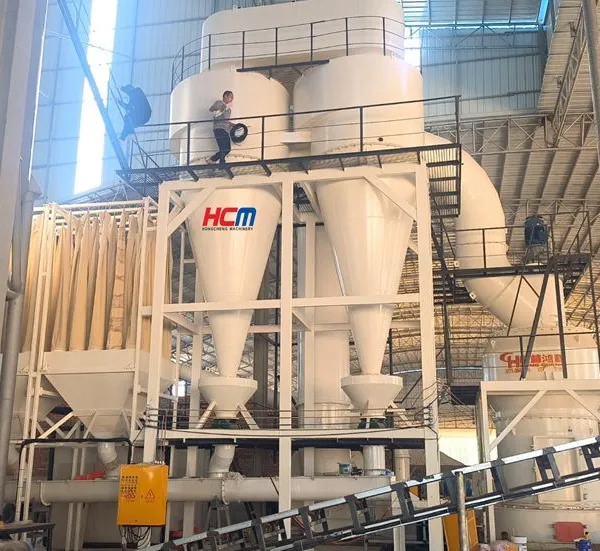
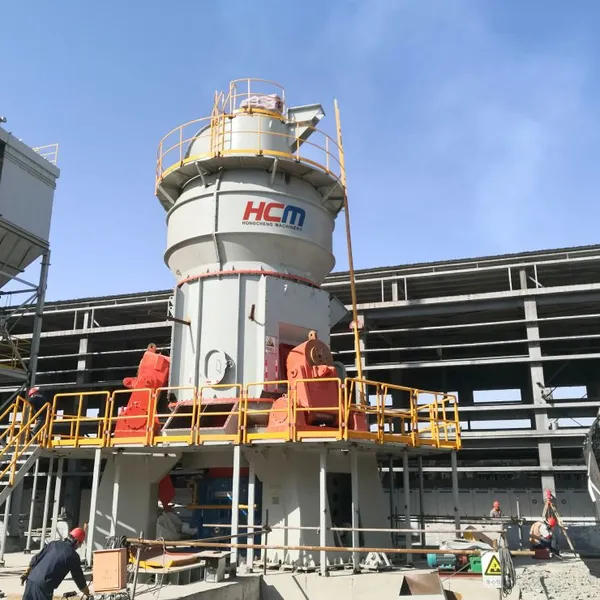
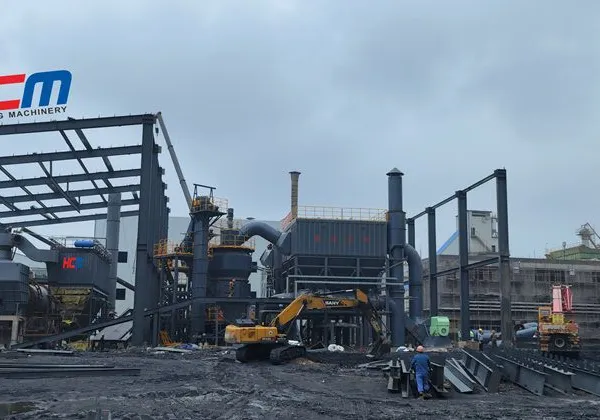
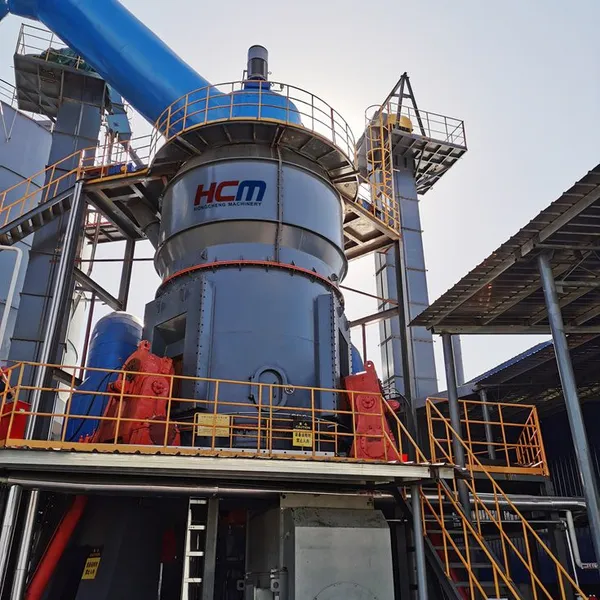
HCM S95-grade Blast Furnace Slag Grinding Mill, Achieving a Fineness of 430 Specific Surface Area With a Production Capacity of 40 T/hNegotiableMOQ: 1 Combo
-
HCM Ultrafine Vertical Mill,ultrafine Powder Vertical Mill for Artificial Stone Production LineNegotiableMOQ: 1 Combo
-
Industrial Dolomite Raymond Mill HCM 1300 Energy Saving Fine Grinding Machine for Building Material Filler PowderNegotiableMOQ: 1 Combo
-
HCM Titanium Dioxide Grinding Equipment Manufacturer | 80-3000 Mesh FinenessNegotiableMOQ: 1 Combo
-
HCM Calcined Vanadium Titanium Slag Ultrafine Grinding Equipment | HLM Vertical Mill | 20 TPH CapacityNegotiableMOQ: 1 Combo
-
Bauxite Fine Processing Machine for Refractory/Ceramic/Abrasive | 325-2500 Mesh Powder Making PlantNegotiableMOQ: 1 Combo