
 Business License
Blog Categories
Vertical Roller Mill vs Ball Mill: A Practical Comparison for Mineral Grinding
Some time ago, a cement additives plant in South Asia replaced its two ball mills with a single vertical roller mill. The stated reason on the capital request was simple: energy. The two ball mills drew a combined 1,100 kW to produce 22 tons per hour of 300-mesh mineral powder.
The vertical roller mill that replaced them produced the same output at 32 tons per hour using a 780 kW drive. The plant's electricity bill dropped by roughly 38 percent per ton, and the floor space freed up was converted into finished product storage.
That story is typical — but it is only half the picture. Ball mills remain the dominant grinding technology in many industries for reasons that have nothing to do with nostalgia. They are robust, forgiving of feed variations, and simple to operate. The right choice depends on the specific production profile.
This article compares vertical roller mills and ball mills across the dimensions that actually drive equipment decisions: grinding mechanism, energy use, capital cost, product quality, maintenance, and operational flexibility.
1. The Core Difference: How Each Mill Grinds
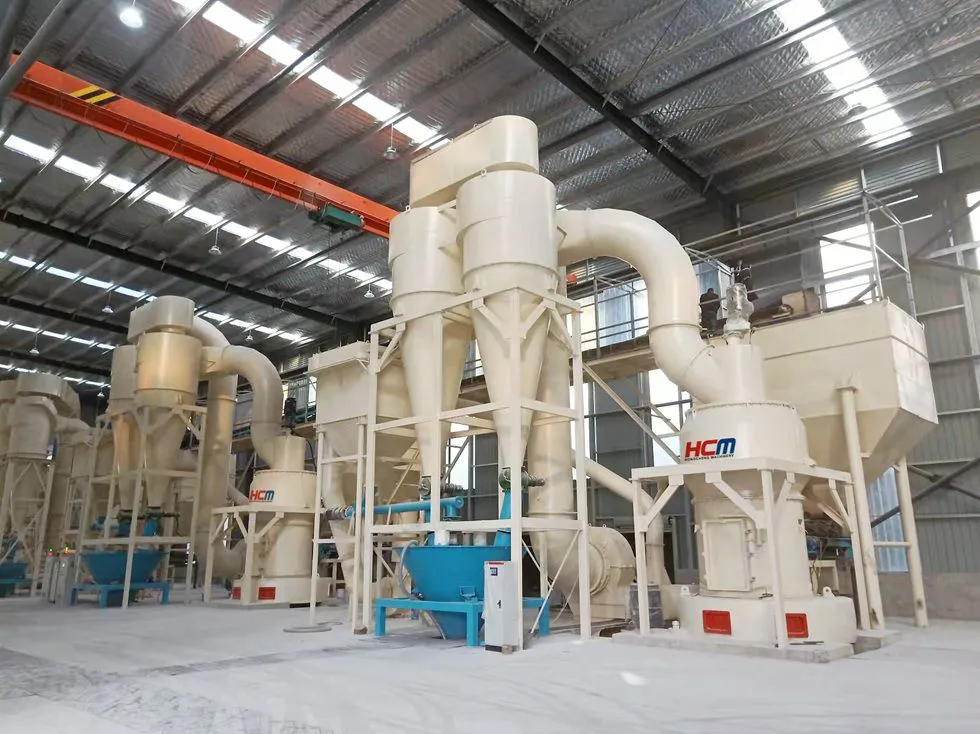
A ball mill is a horizontal cylinder, typically 3 to 6 meters in diameter, partially filled with steel balls. As the cylinder rotates at roughly 70 to 80 percent of its critical speed, the balls are lifted up the shell wall and cascade down, crushing the material through impact and attrition. Grinding is largely random — every particle in the drum is subjected to repeated collisions regardless of its size.
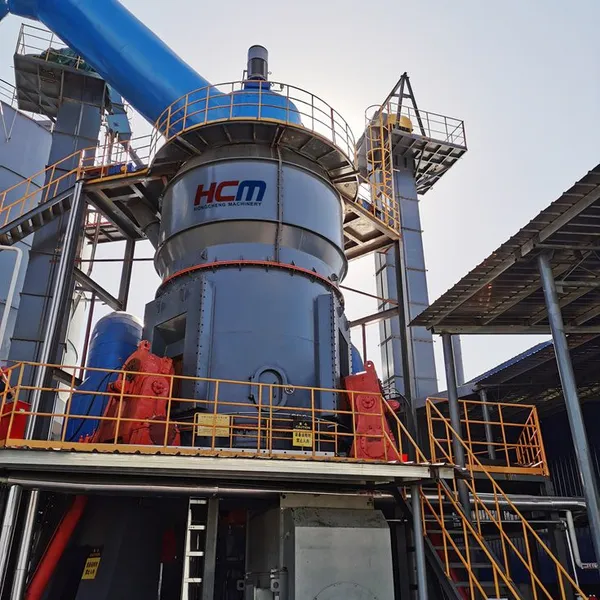
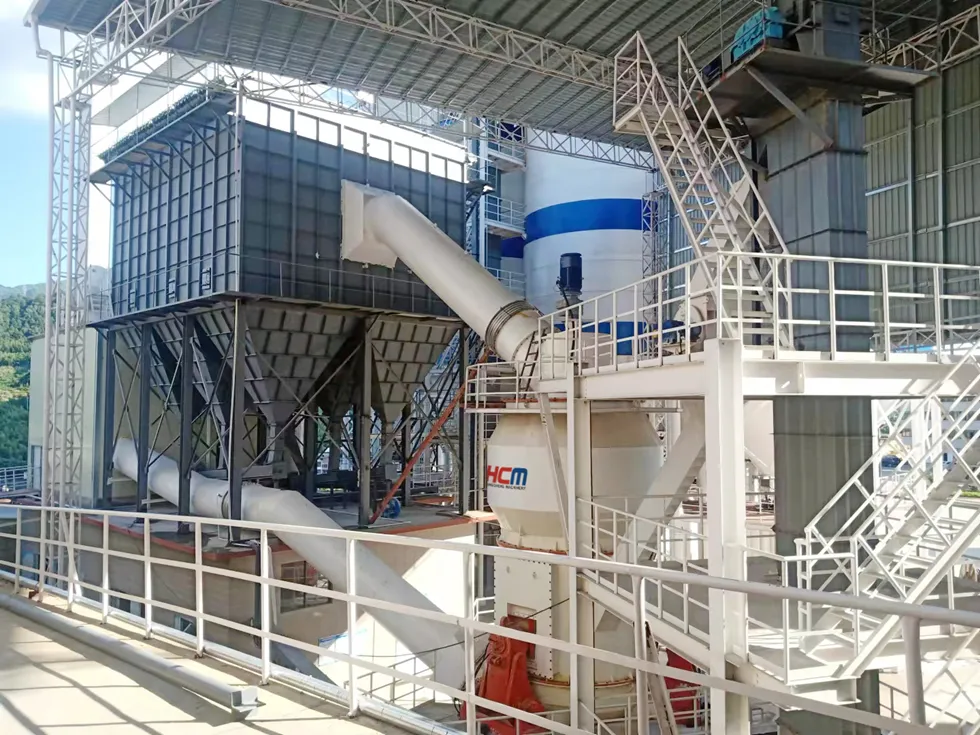
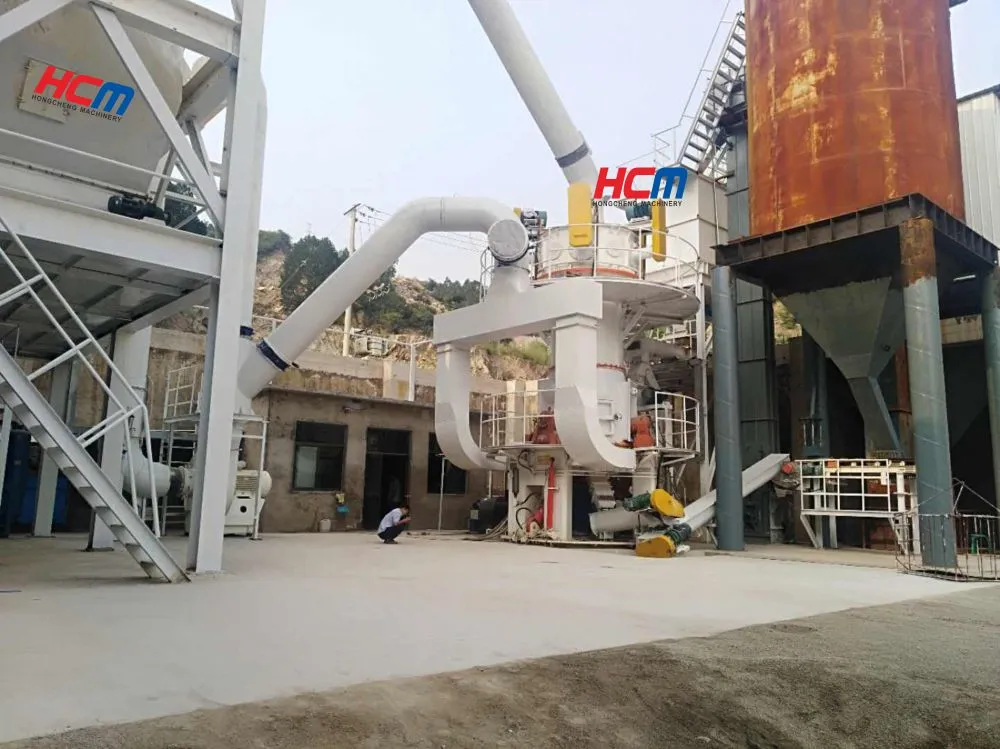
A vertical roller mill (VRM) grinds on a completely different principle. A rotating horizontal table carries the feed under a set of hydraulically-pressed rollers. The material is crushed in a compacted bed between the roller and the table. Particles below a target size are lifted out by an air stream and classified; oversize material is rejected back to the table.
This difference in mechanism drives nearly every other comparison. Bed grinding in a VRM is inherently more energy-efficient than impact grinding in a ball mill, because energy is applied directly to the material bed rather than being dissipated in ball-to-ball collisions and drum shell losses.
2. Energy Consumption Comparison
Specific energy consumption is where the VRM shows its most consistent advantage. For the same material and fineness, a vertical roller mill typically consumes 30 to 40 percent less electrical energy per ton than a ball mill. The table below summarizes typical values for limestone grinding at 200 to 325 mesh.
| Material / Duty | Ball Mill (kWh/t) | Vertical Roller Mill (kWh/t) | Savings |
|---|---|---|---|
| Limestone to 200 mesh | 22 – 30 | 15 – 20 | Roughly 30-35% |
| Limestone to 325 mesh | 28 – 38 | 18 – 26 | Roughly 32-38% |
| Raw cement meal | 20 – 30 | 14 – 20 | Roughly 30-33% |
| Slag (4,000 cm²/g Blaine) | 40 – 55 | 28 – 38 | Roughly 30-35% |
Two factors produce this advantage. First, the VRM applies grinding force directly to the material bed through hydraulics, with no energy lost to lifting grinding media. Second, the integrated dynamic classifier removes fine product immediately, minimizing over-grinding. In a ball mill, particles that reach target size keep getting struck by balls until they exit through the discharge grate.
For a plant producing 200,000 tons per year, a 30 percent energy saving at a typical industrial power rate translates into roughly $60,000 to $150,000 in annual electricity cost reduction, depending on local tariffs.
For plants evaluating the upgrade on purely financial grounds, the payback calculation is straightforward: divide the incremental capital cost of the VRM by the annual energy and maintenance savings. A typical payback period for a ball mill replacement falls between two and four years at industrial electricity prices, before considering the value of the freed floor space and the tighter product distribution.
3. Capital Cost and Footprint
The ball mill has a clear advantage in upfront capital cost. A complete ball mill grinding system — mill, gearbox, motor, and simple separator — costs substantially less than a comparably-sized vertical roller mill with its hydraulic system, dynamic classifier, and gas circuit. For small plants below roughly 10 tons per hour, the ball mill is often the lower-investment choice.
However, total system cost includes more than the mill itself. A ball mill requires a larger building footprint — typically 2 to 3 times the floor area of a VRM for the same throughput — plus heavier foundations, and often a separate classifier and material handling system. When civil works and building cost are included, the full installed-cost gap narrows considerably.
A VRM also combines grinding, drying, and classification in one machine. A ball mill system typically needs a separate dryer for moist feed and a separate dynamic classifier for fine product. The VRM's integrated hot gas system can dry feed with up to roughly 15 percent moisture, eliminating both pieces of auxiliary equipment.
4. Product Quality and Particle Size Distribution
Product quality differs in ways that matter for downstream applications. A ball mill produces a relatively wide particle size distribution, because grinding is random and residence time varies widely between particles. For applications where a consistent median size is more important than distribution tightness — such as many coarse filler grades — this is perfectly acceptable.
A VRM with a dynamic classifier produces a tighter distribution. The D90/D10 ratio is typically 2.5 to 3.5 for a VRM versus 3.5 to 6.0 for a ball mill. For applications that specify particle size distribution — such as 325 mesh limestone for flue gas desulfurization, where coarse tail particles above 44 microns reduce reactivity — the VRM's tighter distribution is a real product advantage.
Both machines can achieve similar median fineness. A ball mill reliably produces 80 to 400 mesh material; a VRM covers 200 to 800 mesh with the same flexibility, and extends further with multi-rotor classifiers on ultra-fine configurations.
5. Maintenance, Wear, and Reliability
Maintenance profiles differ sharply. A ball mill has a simple, robust construction. The main wear items are the liners and grinding media, and replacement is a well-understood routine. Liner life is typically 8,000 to 15,000 hours, and media can be topped up continuously.
Operation is forgiving: a ball mill continues to grind even when feed fluctuates or the operator is less experienced. A VRM has fewer moving parts but more sophisticated ones. The wear parts — rollers and table segments — are fewer in number and last longer per unit of throughput, typically 6,000 to 12,000 hours depending on abrasiveness.
However, the hydraulic system, dynamic classifier, and gas circuit require more specialized maintenance skill. Vibration monitoring and careful control of mill differential pressure are essential to stable operation.
In practice, plants with strong mechanical departments often prefer the VRM for large continuous operations, while smaller plants with limited maintenance resources may find the ball mill easier to sustain. Hongcheng's engineering team typically advises customers on this trade-off based on their operator capability and shift structure.
6. Operational Flexibility and Turndown
Operational flexibility is a growing selection criterion. A VRM can typically operate between roughly 50 and 100 percent of rated capacity while maintaining stable grinding conditions, which suits plants with variable demand. Adjusting the classifier speed changes product fineness within minutes, without stopping the machine.
A ball mill operates efficiently within a narrower band. Below roughly 60 to 70 percent of rated capacity, a ball mill's energy efficiency degrades, because the ball charge is still lifted at full speed regardless of feed rate. Changing fineness typically requires adjusting feed rate, rotation speed, or media — a slower, coarser adjustment than a VRM classifier change.
For plants that run a single product at near-constant rate around the clock, the ball mill's flexibility limitations rarely matter. For plants that chase multiple markets with different product grades, the VRM's quick fineness changes and wide turndown range are practical advantages.
The two technologies also differ in how easily they integrate with plant automation. A VRM's PLC controls the classifier, hydraulic pressure, and gas flow as a single coordinated loop, and modern systems support remote monitoring and recipe-based grade changes. A ball mill's controls are simpler — feed rate and rotation — but the surrounding system, including the separator and material handling, typically requires its own automation logic. For plants planning a fully integrated control room, the VRM's native automation is a practical advantage.
7. Environmental and Safety Considerations
Environmental performance is an increasingly important selection criterion, and the two technologies differ meaningfully. A ball mill is the noisier machine: steel-on-steel contact generates 95 to 105 dB(A) at close range, and mills installed near residential areas typically require acoustic enclosures. A VRM runs quieter at 85 to 95 dB(A), because grinding occurs in a compacted material bed rather than through steel ball impacts.
Dust control is driven primarily by the collection system rather than the mill type, but the VRM's integrated gas circuit simplifies it. In a VRM, the classifier gas stream carries product directly to a single bag filter, which typically achieves emissions below 20 mg/Nm³. A ball mill system has more open transfer points — the mill discharge, the separator feed, and the bucket elevator — each requiring its own dust collection point.
There is also a difference in consumable handling. A ball mill consumes grinding media continuously, typically 50 to 150 grams of steel per ton of product, which adds both cost and an ongoing material handling burden. A VRM consumes wear material at a lower rate per ton and its wear parts are replaced in scheduled batches. For plants with strict environmental reporting requirements, this difference in consumables can matter.
Safety practices differ as well. Ball mill maintenance requires emptying and handling thousands of kilograms of grinding media, a physically demanding job with lifting risks. VRM maintenance involves high-pressure hydraulic systems, which require proper lockout and pressure-relief procedures. Both are manageable, but they demand different safety training.
8. Making the Decision: A Selection Framework
The table below condenses the comparison into a decision framework. No single technology wins every category; the correct choice depends on which dimensions matter most for a specific plant.
| Selection Criterion | Ball Mill Favored When | VRM Favored When |
|---|---|---|
| Energy cost share | Electricity is cheap, or plant is small | Electricity is costly, or plant is large |
| Throughput | Below roughly 10 tons/hour | Above roughly 15 tons/hour |
| Fineness requirement | 200 mesh or coarser | 325 mesh or finer, tight distribution |
| Feed moisture | Feed is dry | Feed is moist (up to 15%) |
| Maintenance capability | Limited operator skill available | Experienced maintenance team |
| Product changeovers | Single product, constant rate | Multiple grades, variable demand |
A few years ago, a mid-sized mineral processor in the Middle East faced exactly this framework. The plant needed 18 tons per hour of 300-mesh dolomite powder, its electricity tariff was high, and its maintenance team was experienced. The engineering study recommended a single HLM vertical roller mill over two ball mills, and the plant has operated the machine continuously for three shifts since commissioning.
By contrast, a smaller plant in Central Asia producing 6 tons per hour of 200 mesh barite chose a ball mill line. Its electricity cost was low, its operator skill limited, and its capital budget tight — three criteria that all pointed the same direction. The ball mill remains in operation today with minimal specialized maintenance.
9. Frequently Asked Questions
9.1 Which mill is more energy-efficient, ball mill or vertical roller mill?
The vertical roller mill is more energy-efficient, typically consuming 30 to 40 percent less electrical energy per ton for the same material and fineness. The savings come from direct bed grinding, which applies force exactly where it is needed, and from integrated classification that prevents over-grinding. The advantage grows with throughput and electricity price.
9.2 Is a ball mill cheaper than a vertical roller mill?
Yes, on equipment price alone, a ball mill system typically costs less upfront. But when foundations, building footprint, a separate classifier, and a dryer for moist feed are included, the full installed-cost gap narrows. For throughputs above roughly 15 tons per hour, the VRM's lower operating cost often outweighs its higher first cost within a few years.
9.3 Can a vertical roller mill replace a ball mill in an existing plant?
In most cases, yes, and this is a common upgrade path. The VRM delivers higher throughput per unit of motor power, lower energy cost, and a tighter particle size distribution.
The main engineering work is the foundation, the gas circuit, and the feed and product handling systems. Guilin Hongcheng Mining Equipment Manufacturing Co., Ltd. regularly supplies VRMs for ball mill replacement projects and provides site support during changeover.
9.4 What is the typical lifespan of wear parts in each mill type?
Ball mill liners typically last 8,000 to 15,000 hours, with grinding media added continuously. VRM rollers and table segments typically last 6,000 to 12,000 hours for medium-hard materials, with segmented designs allowing partial replacement. Actual life depends on material abrasiveness, operating settings, and preventive maintenance discipline.
Recently Posted
-
Inside Three Manufacturing Bases: How Guilin Hongcheng's 950,000 m² Production Capacity Supports Glo
September 4, 2026Every large grinding mill begins its life on a shop floor. The quality of that floor — its equipment, its inspection discipline, a Read More
 -
Calcium Carbonate Grinding: Selecting the Right Mill for GCC and PCC Applications
September 4, 2026A while back, a paper filler plant in Southeast Asia needed to expand its calcium carbonate production from 800 mesh to 1,250 mesh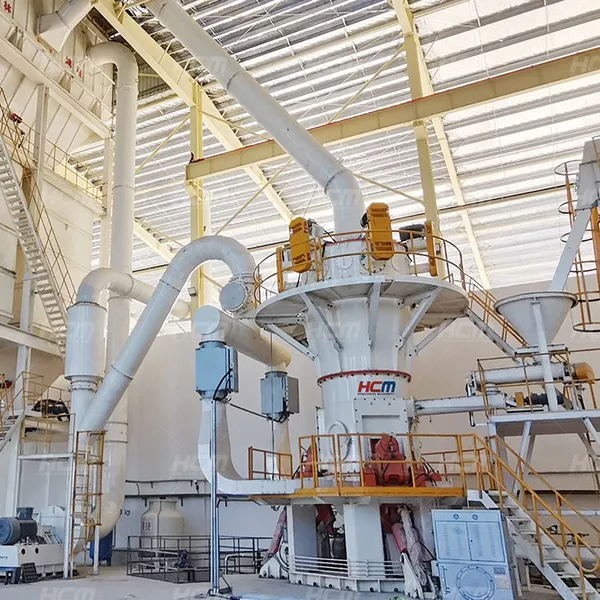 Read More
 -
Vertical Grinding Mill Technical Specifications: Capacity, Power, Feed Size, and Product Fineness
September 3, 2026A while back, a plant engineer in South America was evaluating two vertical mill quotations from different suppliers. Both machine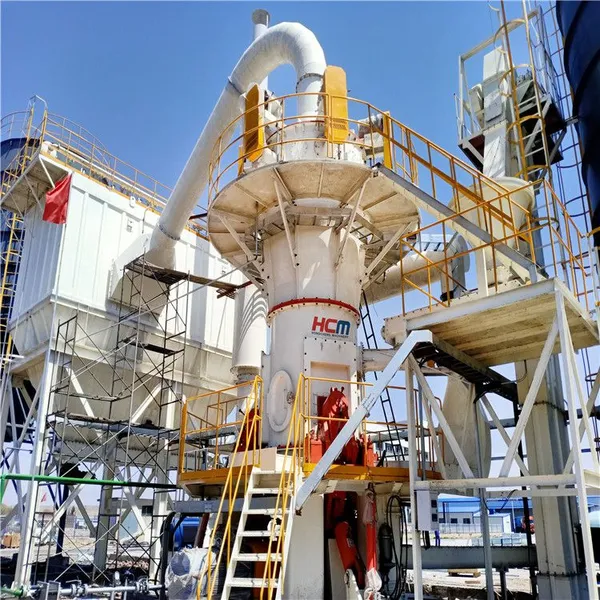 Read More
 -
Raymond Mill Explained: How Pendulum Grinding Technology Powers Industrial Mineral Processing
September 2, 2026Not long ago, a mineral powder plant in Southeast Asia faced a common dilemma. The operation needed to expand its production of 32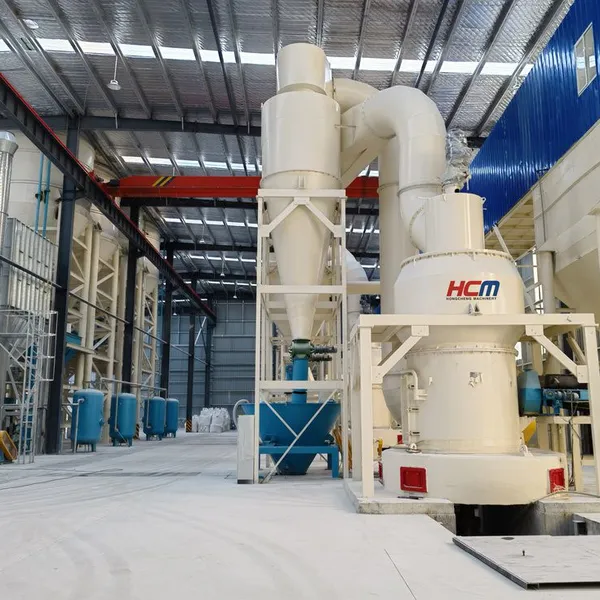 Read More

Contact Us
Recommended Products
-
 HCM Ultrafine Vertical Roller Mill Produces 1250 Mesh Ultrafine Calcium Carbonate PowderNegotiableMOQ: 1 Combo
 -
China HCM Manufacturer HLM2000 Vertical Coal Mill - 200 Mesh, 28 Ton/HourNegotiableMOQ: 1 Combo
-
10 TPH 180 Mesh Coal Grinding Mill | HC1500 Open Circuit Raymond Mill for Power PlantNegotiableMOQ: 1 Combo
-
HCM China HLM1700 Large Vertical Roller Mill for Water Slag Grinding | 325 Mesh 99% Passing Rate, 10-15t/h OutputNegotiableMOQ: 1 Combo
-
HCM 1850 Raymond Mill for Petroleum Coke | 6 TPH @200 Mesh, 30% Less Power ConsumptionNegotiableMOQ: 1 Combo
-
Large Output HCM HLMX Superfine Vertical Mill 16t/h for 800 mesh Calcium Carbonate Filler PowderNegotiableMOQ: 1 Combo
-
HCM Vertical Mill for Ultra Fine Mineral Powder Dolomite Milling Machine for Plastic Modification MaterialsNegotiableMOQ: 1 Combo
-
Low Maintenance Cost China Raymond Mill, Versatile Raymond Roller Mill For Various Non-Metallic OresNegotiableMOQ: 1 Combo
-
Large Industrial Stone Mills - Industrial Powder Grinding Machine | High Efficiency Low Energy Consumption Mill Industrial for Mineral ProcessingNegotiableMOQ: 1 Combo
-
HCM Mill Roller Machine Raymond Roller Mill Roller Mill Equipments 20t/h Limestone Grinder to 200 MeshNegotiableMOQ: 1 Combo
-
HCM HLMX Ultrafine Vertical Mill | 700,000 TPY High-Grade Calcium Carbonate Production LineNegotiableMOQ: 1 Combo
-
The HCM Limestone Ultrafine Powder Processing Equipment, the HLMX Ultrafine Vertical Mill, Can Efficiently Produce Ultrafine Limestone Powder.NegotiableMOQ: 1 Combo
-
China HCM Bentonite Ore Raymond Pulverizer, Professional Ceramic Grade 200 Mesh Bentonite Powder Making Machine, 20 Ton Per Hour Grinding CapacityNegotiableMOQ: 1 Combo
-
6t/h High Output Fluorite Ore Grinder HCM HCH Ring Roller Mill 325 Mesh D95 Fineness Industrial PulverizerNegotiableMOQ: 1 Combo
-
High Efficiency HCM Vertical Mill Bauxite Grinding Plant 44 Ton Per HourNegotiableMOQ: 1 Combo
-
Customized Lepidolite Grinding Production Line 30TPH Vertical Roller Mill for Battery Grade Lithium Mineral ProcessingNegotiableMOQ: 1 Combo
-
HCM S95-grade Blast Furnace Slag Grinding Mill, Achieving a Fineness of 430 Specific Surface Area With a Production Capacity of 40 T/hNegotiableMOQ: 1 Combo
-
HCM Ultrafine Vertical Mill,ultrafine Powder Vertical Mill for Artificial Stone Production LineNegotiableMOQ: 1 Combo
-
Industrial Dolomite Raymond Mill HCM 1300 Energy Saving Fine Grinding Machine for Building Material Filler PowderNegotiableMOQ: 1 Combo
-
HCM Titanium Dioxide Grinding Equipment Manufacturer | 80-3000 Mesh FinenessNegotiableMOQ: 1 Combo